
The Disclosure Edition
On UAPs, the new Spielberg, and government transparency.
Michael Hastings-Black (MHB) is a researcher & brand strategist. He runs the agency AskMHB, and hosts the interview series Spin That Bottle. Past contributions to WITI include the Antimatter Road Trip, and the Dead Cinderella and Inherited Ceramics editions.
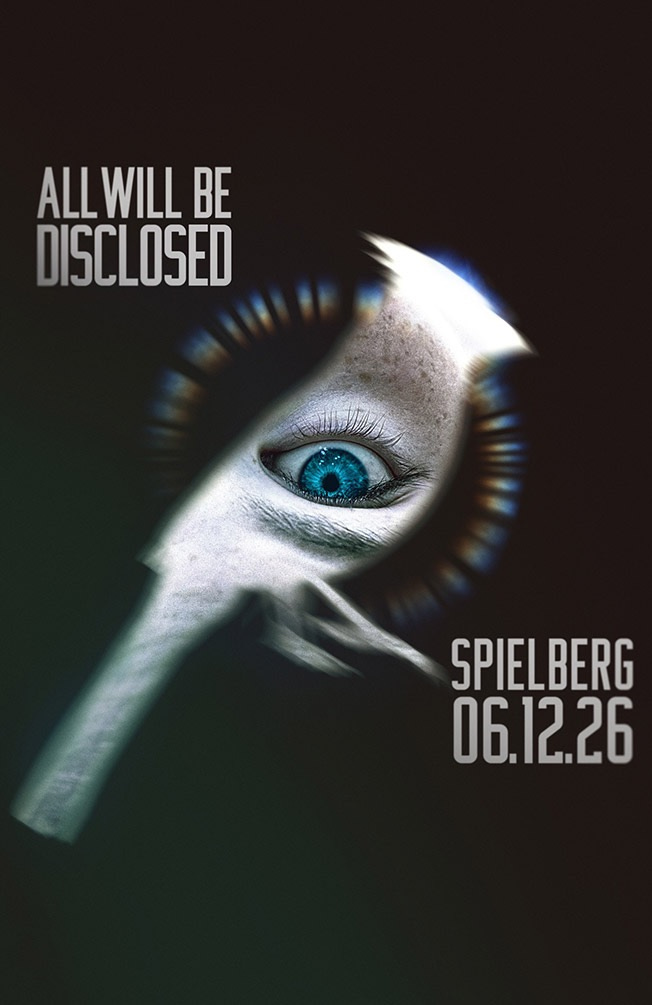
Michael here. This summer, Steven Spielberg returns to alien territory with Disclosure Day, in which a whistleblower shares government secrets proving the existence of extraterrestrial life. The tagline is “All Will Be Disclosed.” The film has already generated a distinct class of online conspiracy theory: It’s not fiction, it’s actually coordinated preparation.
Why is this interesting?
That’s a bit much. But the underlying topic isn’t fringe anymore.
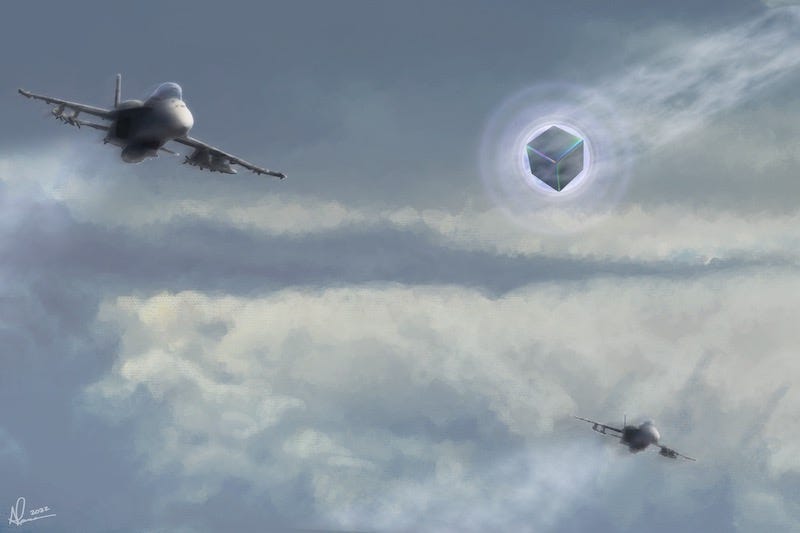
Around 2021, UFOs were ‘rebranded’ as UAPs (Unidentified Anomalous Phenomena). Since then, the US government and military have publicly acknowledged encountering UAPs that defy our understanding of physics and the known world.
Luis Elizondo, the former head of the Pentagon’s Advanced Aerospace Threat Identification Program, was blunt when he testified before Congress in November 2024: “Advanced technologies not made by our government, or any other government, are monitoring sensitive military installations around the globe.” Secretary of State Marco Rubio has stated on record that something unidentified has been repeatedly observed operating over restricted nuclear facilities.
For decades, the institutional directive for anyone in government, military, or intelligence was simple. Don’t talk about any of this. Ever. There was no upside. Discussing UFOs or aliens was career-ending. The tides have now changed.
John Podesta, who served in both the Clinton and Obama administrations, has said his single biggest regret from his time in government was failing to get the UAP files declassified.
The conversation has moved from “Are they real?” to something much harder: what does a government actually do with this information? Disclosure, and then what…?
Governments exist to maintain order, provide security, and project control. An admission that objects of unknown origin, operating on physics we don’t understand, and interested in our most dangerous technology have been flying around our airspace for the last 80 years doesn’t fit neatly into any of those functions. It doesn’t strengthen any government’s hand. And it raises questions that no briefing can fully answer.
Past US presidents have reportedly war-gamed disclosure scenarios. The analysis, by most accounts, tends to conclude that the geopolitical implications are paralyzing. If a leader confirms knowledge of non-human intelligence that makes existing military hardware look like a tricycle, who does that benefit? For those in charge, it’s ultimately easier to just disclose nothing.
So what happens next? President Trump might be the one to finally disclose. The logic aligns with his MO: the appeal of being first, the distraction value from things like inflation, Iran & Epstein, and the populist framing of revealing what ‘the deep state’ had hidden. In Trump’s eyes, the above are all reason enough for a bombshell disclosure. He’s signed a directive instructing the Pentagon to release its UAP files. Whether that leads to anything is TBD, as there’s an (alleged) history of those ‘in the know’ thwarting any movements toward disclosure. Perhaps we’re just awaiting scraps and breadcrumbs from those in power. Or perhaps not.
In Disclosure Day, the drama seems to run on two parallel tracks: a whistleblower racing to tell us what the government knows, and the ‘others’ deciding to make themselves known.
In our world today, there are lots of humans talking about humans deciding what they will or won’t tell other humans. Yet the reality might ultimately be that disclosure isn’t the humans’ or the government’s call to make.
Every official report of UAP behavior suggests a technology and intelligence operating on a timeline and with an agenda entirely its own. The craft (and whatever controls them) don’t need human or governmental permission to show up near nuclear silos. They don’t need permission to leave. And thus they certainly don’t need permission to make themselves known to all mankind.
We’re used to thinking about disclosure as something that flows downward from those who know to those who don’t. Or something that lands loudly via whistleblowers. But we don’t have a framework for a world where the information arrives from somewhere else entirely. Man plans, UAPs laugh, and governments scramble to spin what they could have told citizens decades ago. Then what? (MHB)