


Sometimes the best geopolitical insight comes from fiction writing. Friend of WITI and excellent spy novelist Charles Cumming joins us for a rare Friday interview. Be sure to check out the Box 88 series, and his new book Icarus 17, which I read this summer and greatly enjoyed. -Colin (CJN)
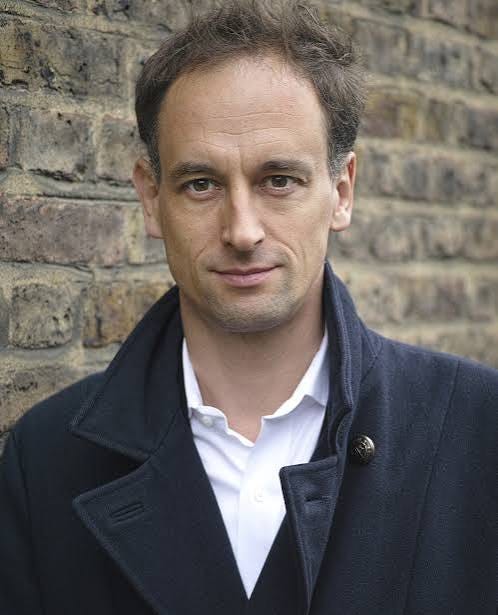
The Observer just called you le Carré’s rightful heir. However, the moral-exhaustion register he invented is now the default house style for the entire genre — every spy is tired, compromised, quietly sad. Where does that inheritance stop being useful? What are the new energies or registers you’re interested in?
I’m glad I’m not the only person who feels this way. The spy genre has survived on certain tropes and archetypes for more than a hundred years. In some ways the idea of an exhausted, compromised spy is baked into the material; by definition, he or she is living some version of a double life; they can’t – or won’t – tell even their close friends and family what they’re up to. Nevertheless, having written novels about molehunts (A Colder War) and terrorist attacks (A Divided Spy), I thought it was time to shake things up a bit. Hence the split historical timelines of the BOX 88 novels. You see the young, eager, ambitious Lachlan Kite as a young spy in the 1990s but you also find him in middle-age in the present day as a man of greater personal and professional experience.
How do you write live geopolitics knowing the ground will move under you between draft and publication?
With great difficulty. Icarus 17 was planned as a story set in Israel and Lebanon. Then October 7th happened and I had to relocate the action to Greece and the Balkans. For the fifth Kite novel I was hoping to write a story about a forthcoming American Presidential election, but with the way things are going in the US that feels like a fool’s errand. Nothing I dream up could ever come close to the horrors of what’s coming downs the tracks electorally in the next two-and-a-half years. The mid-terms will look like a picnic next to the 2028 Presidential run. If American democracy survives Trump, it will be a miracle.
Talk to me about sometimes the real truth residing only in fiction. Some intelligence officers will never talk to a journalist, but they will talk to a novelist.
In my experience that’s an outlet for intelligence officers, a release valve if you like. They can tell me things that they know I will bend into fiction, thereby absolving them of any qualms they might have about revealing secrets. There’s also perhaps a small amount of vanity at work; it’s nice to be able to tell someone about the brave, dangerous things you have done and to know that those things will make their way into print. It’s a small reward for carrying out work of great importance in the shadows without due recognition from the public.
Biometric borders, phone forensics, facial recognition — the brush pass and the dead drop of old Russia novels are more or less dead. What’s replaced them, and how do you keep a field operation plausible without it becoming a novel about people looking at screens? What is still relevant?
You’re right that technology – or SIGINT – is now the dominant player in espionage, but that’s not to say that Moscow Rules have fallen out of favour. The safest way to pass a piece of sensitive material to another person is still in brush contact; to transmit it digitally runs the risk of the message being compromised by a third party. Much of the old school tradecraft you describe is, thankfully, still in use. A novel about people looking at screens would be amazingly boring. Technology of that kind – all the bells and whistles of orbiting satellites, cellphone intrusion, banks of computer screens in a secret bunker – works much better on television and on the cinema screen.
You were assessed by SIS in 1995 and not taken. Thirty years and thirteen books on, what do you think they saw or didn’t see?
I think they saw a loner with a First Class degree from a good university who had spent ten years in English boarding schools and emerged with a certain amount of natural charm. Interpersonal skills are of course vital for an intelligence officer looking to recruit agents. What perhaps they didn’t see was my naivety about the world at 25 and the absence of what Graham Greene described as “the sliver of ice in the heart”. In short, I wasn’t ruthless or ambitious enough to make it as a spy. I also have an appalling memory for facts and faces which has only grown worse over the past 30 years.
Real former officers now write thrillers and memoirs, and readers say they want authenticity. How much of what feels authentic in your books is accurate, and where do you knowingly dramatize because the truth is boring?
I’ve always tried to write as close to the truth as possible. Nothing happens in Icarus 17 that couldn’t happen in real life. Readers are certainly interested in authenticity, which is why so many former intelligence officers have enjoyed successful careers writing spy fiction. Nevertheless, what draws people back to these sorts of books isn’t the gadgets or the tradecraft or even a particularly suspenseful plot. It’s character. When you think of the great spy novelists you think of their most famous creations: Richard Hannay, James Bond, George Smiley, Jackson Lamb.
What is the best show you’ve watched about your chosen subject material?
The Bureau, without a shadow of a doubt. A French TV series made with the help of the DGSE about spies operating in Africa and the Middle East during the high tide of Islamic State. It’s sensational.
Your characters have cities. Kite’s Athens, Kell’s Istanbul, Milius’s Madrid. What makes a city function as a spy setting rather than just scenery — and what are you actually doing when you’re there, notebook-wise?
I’m taking photographs and recording videos, typing notes into my phone and then writing those notes up at night. It’s vitally important to walk the ground, to taste the food, to watch the locals. Often ideas will spring from a visit to, say, a museum or a monument. I went to Dakar, the capital of Senegal, for Kennedy 35. It was ferociously hot and made me realise how difficult it would be for white European intelligence officers to be operational in a climate like that. All of the heat and the sweat and the humidity went into the book. Kite found himself with an unexpected opponent: the weather.
What about the longstanding role of hotels and espionage. And the role they can play in your novels? What is interesting to you?
In spy stories, as in real life, you are always trying to find a place where two characters can speak to one another without fear of being seen or overheard. In a hotel room you are alone – or might think you are. There could be a surveillance team listening to your every word in the next room. As somebody once observed, character is how you behave when you think nobody is watching you. For a stranger in a strange land the hotel room becomes both sanctuary and potential trap. Lobbies also offer very good natural cover, giving two people a perfectly legitimate reason to meet up in public. Of course a surveillance team can also position themselves at all points around a hotel, posing as guests or visitors or members of staff. I was lucky enough to stay at the Lana Dorchester in Dubai while writing Icarus 17. That wonderful hotel made its way into the novel.
Great interview! Charles Cumming is one of my favourite writers