

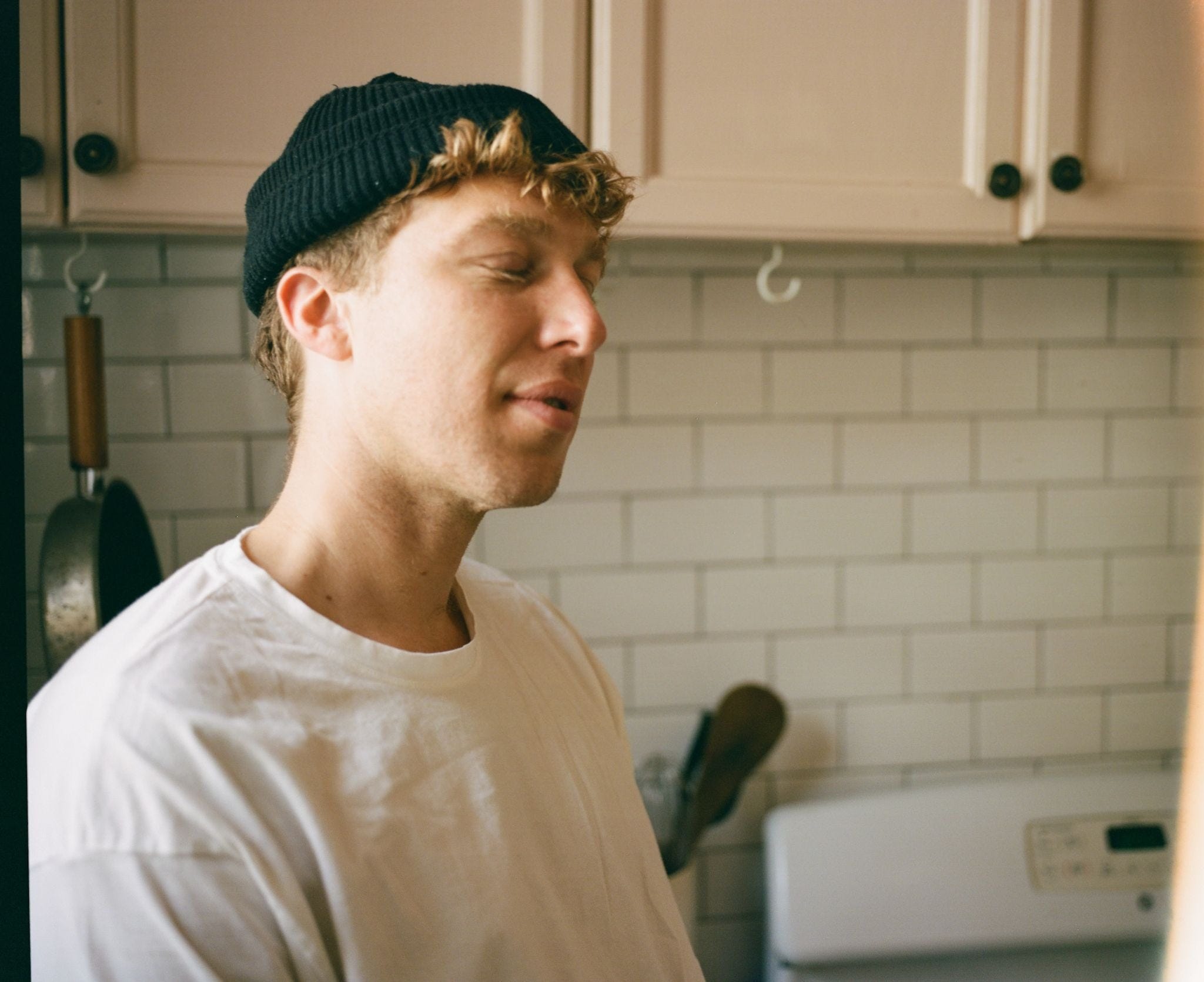
Bodhi Landa writes the excellent Thirst Behavior. He’s a sommelier and a culture writer. -CJN
Tell us about yourself.
I’m Bodhi Landa, a sommelier and culture writer based in Upstate New York and the East End of Long Island. I run an online publication called Thirst Behavior, which covers wine, hospitality, and the social performance of taste. I spend a lot of time thinking about how people construct identities through consumer choices — and how those signals get interpreted, misinterpreted, and aestheticized by everyone around them. Wine happens to be an unusually fertile ground for this kind of inquiry because it’s fundamentally abstract and subjective, but also loaded with meaning. I also really love Mexican food.
Describe your media diet.
I stay current on pop culture with podcasts because my days are usually split between writing and restaurant work, both of which leave my hands occupied. My regular rotation is How Long Gone, Straightiolab, Nymphet Alumni, and for industry stuff, This Is TASTE. For New York restaurant news and hospitality culture, I read Caper — where I’m also a contributor — as well as Helen Rosner’s writing in The New Yorker. I consume a number of wine Substack newsletters as audio while I’m on the treadmill or walking the dog, as well as Feed Me and NY Mag’s Dinner Party.
I subscribe to Noble Rot and New York Magazine in print. Beyond that, I consume a probably unhealthy amount of wine educational material and trade information as part of my work as a sommelier and wine educator.
A lot of my actual “media diet,” though, comes from restaurants themselves. If you spend enough nights on the floor listening to people order martinis, explain natural wine to dates, or negotiate status through reservation choices, you start to realize restaurants are basically focus groups for contemporary aspiration.
What’s the last great book you read?
I’m not proud of this, but I read remarkably few books and almost no fiction these days. I’ve always had a really difficult relationship to reading, which I realize may come as a surprise given that I write for a living. The last book I really loved was Dilettante by Dana Brown. It perfectly captured that sensation of arriving at what feels like the cultural center of the universe and thinking, “What the fuck am I doing here?”
Dana was Graydon Carter’s assistant before becoming his deputy editor at Vanity Fair, and during part of that same era I was working at Graydon’s restaurant, The Waverly Inn and doing some private hospitality work at his house. Reading Dana’s memoir felt strangely like reading my own story from a nearby parallel universe.
What are you reading now?
Like all other millennials, Famesick by Lena Dunham. It’s incredible.
What’s your reading strategy when you pick up a print copy of your favorite publication?
Well, I look at the table of contents, then I navigate to the piece that looks most interesting. Pretty standard I guess. I like an editor’s letter when it’s good, but too often they manage to say nothing at all. I’m generally drawn to strong takes and highly opinionated features.
Who should everyone be reading that they’re not?
It’s hard for me to imagine that there’s anything out that that everyone should be reading, mostly because culture feels so fragmented and algorithmically individualized. I feel like people ‘should’ be reading, like, Foucault, Lacan, Butler and Berlant. But increasingly, those kinds of ideas are being rendered legible in a totally different information economy and by funnier people, like George Civeris, Jacqueline Novak and the couple from Blackbird Spyplane.
I also wish more people would read restaurant criticism broadly, even if they don’t care about restaurants. Good hospitality writing is rarely just about food and drink. It’s usually about class performance, cities, labor, aspiration, aesthetics, loneliness, and status anxiety.
What is the best non-famous app you love on your phone?
Before I started writing full-time, I spent a lot of time making electronic music from my home studio in New Orleans. Part of many producers’ workflows involves browsing massive online libraries of drum sounds, loops, and samples. CoSo is an app made by Splice, which is basically the main marketplace for that kind of thing. The app just serves you sounds in a feed and lets you stack them on top of each other to quickly sketch musical ideas on your phone. It automatically matches the key signature and bpm so that it all fits together. If you don’t like something, you swipe to the next one.
A friend once described it to me as “Tinder for perc loops,” which I found very funny. It satisfies the same urge to consume information through an endless feed that social media does, but ideally you leave with an actual musical idea you can bring back into your studio practice. It also activates the same part of my brain as shopping for wines with other people’s money. I guess I just like arranging things for other people to experience.
Plane or train?
Train! I love spacing out and looking out the window. I’m also terrified of flying, though I’ve done it frequently my whole life.
What is one place everyone should visit?
Saturn Bar in New Orleans.
Tell us the story of a rabbit hole you fell deep into.
Oh man, I know an embarrassing amount about the manosphere from YouTube. I witnessed first hand how the internet radicalizes young men via recommendation algorithms and self improvement content. The rabbit hole looks something like this: music production tutorials → DIY music marketing advice → online business content → “alpha mindset” self-improvement videos → Jordan Peterson lectures → increasingly strange forms of male grievance and pseudo-philosophy → straight-up Nazi shit.
What fascinated me was how seamless the progression could feel, especially to people more impressionable than I am. Every individual step seems psychologically legible when you’re watching it happen. A lonely teenager wants to make music, then wants the confidence to bring the music out of the bedroom, then wants money, then wants status, then wants an explanation for why modern life feels alienating. The recommendation algorithm is incredibly effective at turning those anxieties into a kind of serialized entertainment product. Now this kid wants a wild and maybe dangerous cocktail of unregulated peptides!
It gave me a lot of empathy for younger men online and a real perspective on the whole male loneliness thing. The YouTube recommendation algorithm is one hundred percent a drug, and some of the worst people on the planet are the most successful dealers.
