
The Omnipresent Music Edition
On deafness, distraction, and the dog sh*t problem.
Jonathan Weiss (JW) has led many lives. After discovering a 200-year-old stone mill in Eastern Pennsylvania, he lovingly turned it into Oswalds Mill Audio—one of the greatest places to listen to sound in the United States. That whole story is great, and we’re glad he’s here today.
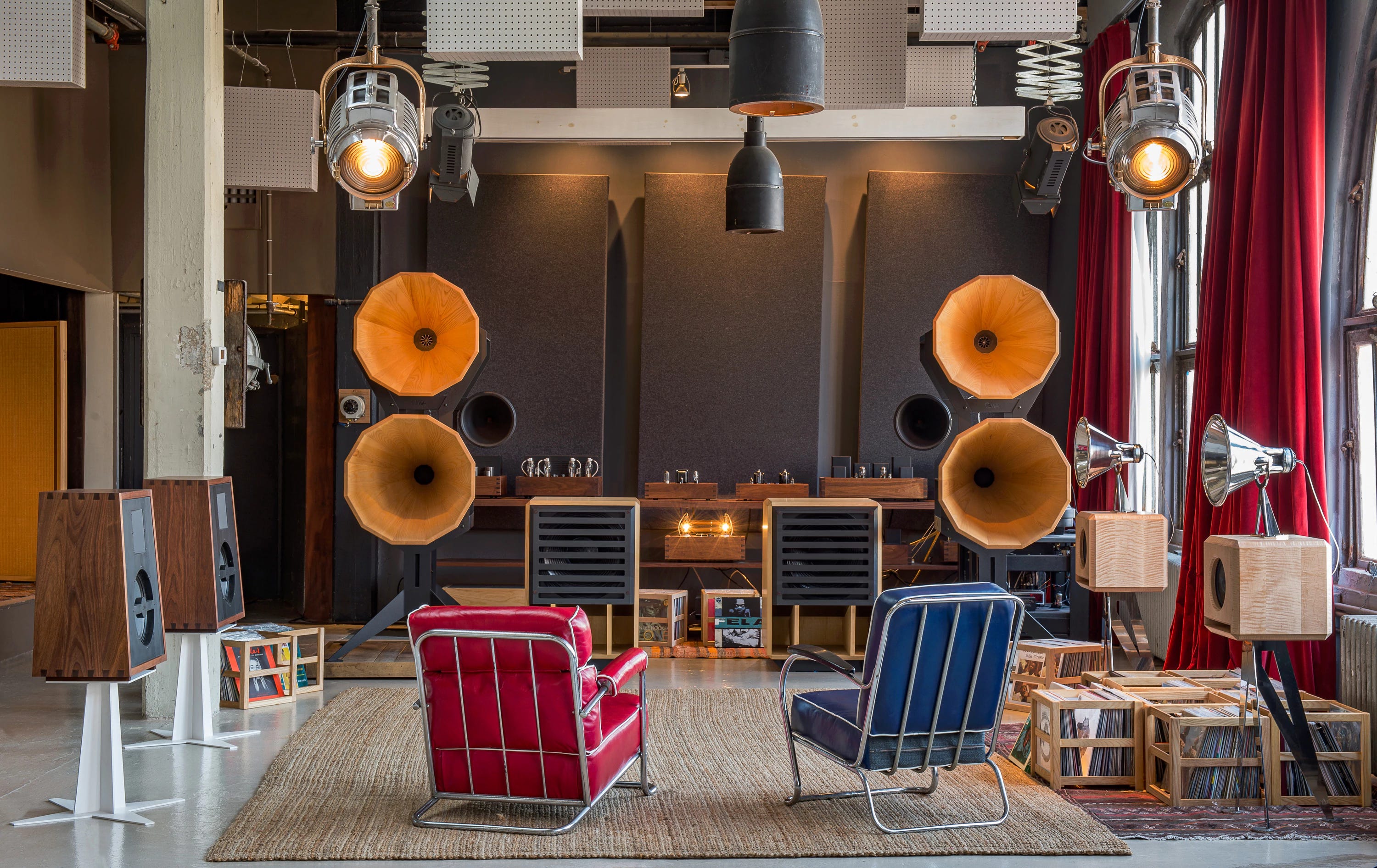
Jonathan here. For the last few years, I’ve had a dawning understanding of our collective experience of sound and music which can only be described as a crisis. We are now so inundated by the omnipresent, public and commercial use of music as to be rendered psychically deaf.
Think about your own day. In almost every place you go—from an Uber to any store, cafe or restaurant—music is playing continuously. Not music you ever listen to, listening being the active form of hearing. Just a trace of music added to keep you moving, buying, and most importantly, to distract you. We’re like the frog in the pot of water, gently warmed and then finally cooked.
Here’s the paradox: we live in the most music-saturated moment in human history, yet most people have never actually heard real music unless they know someone who plays an acoustic instrument. Music is everywhere, but we’ve become incapable of actually listening to it.
I began to suspect something was wrong years ago, when I realized just how hard it was to get anyone to actually sit down and listen to music anymore. I make audio equipment—very high quality loudspeakers, tube amplifiers and turntables—and I could sense how uncomfortable people had become with the act of sitting still, the necessary precursor for listening. People would ask me, “what do I do with my eyes?” The visual so dominates our sensory field that the auditory has become its slave.
It’s been a slow, insidious process since the digitalization of music in the 1990’s. Analog music (vinyl) seemed expensive and cumbersome compared with virtual, free, and unlimited digital options. Music could now be used everywhere, all the time, to both control and manipulate us. Keep shoppers energized and moving. Make people drink more alcohol. The greatest artistic creation of mankind, cheapened into the lullaby of commerce to direct and placate.
Why is this interesting?
Because the implications extend far beyond your ability to enjoy a meal without shouting. Music is the most powerful force known to instantly control and regulate our nervous system. Its use everywhere, all the time, has had very profound effects on how we think, feel, and relate to each other.
Our hearing is a very active sense—it can zero in on a conversation in a loud, crowded room (this is called the ‘Cocktail Party Effect’). But our brains have built filters against this music pollution. These filters don’t just make the music-as-noise bearable, they create a shell into which we retract unconsciously. This defense mechanism has destroyed most people’s interest or ability to actually listen. Noise has closed the door to listening.
And when you can’t listen to others, you can’t properly relate to them. When this happens on a large scale, we experience the kind of political crisis and tumult we know all too well. When you can’t listen to yourself—not just to your mind but to your body, with which you must inevitably do the listening—mental and physical wellness are in peril. I must emphasize, I am not being metaphorical.
This situation is not a public annoyance, it is a matter affecting every aspect of our existence.
This probably seems like too much to accept. And what could anyone possibly do about it anyway?
Well… I’m a New Yorker, born and bred, and my grandmother Fran Lee was a local NYC celebrity and social activist who single-handedly took on the city’s dog fouling problem in the late 1960s. Back then you could literally not take more than a few steps on a NYC sidewalk without stepping in it. It was a running joke on late night TV—you had to keep your head down, otherwise you were scraping it off your shoe.
There is now almost none of it on our streets. My grandmother’s pooper scooper law not only worked, it spread all over the world. Most cities are now, like NYC, free of poop.
So: Next time you’re in a restaurant shouting to be heard by the person next to you, say something about the sound to the manager. You can let it be known what you think about what you are forced to hear. Become aware of the sound in your environment. Only then can you understand its effect on you. Ask yourself: have you ever been in a public, commercial space and suddenly felt a moment of joy and happiness because of the recorded music you are hearing? Not just a happy memory evoked, but from the music itself? That’s exactly what music is supposed to do. To transport you, move you emotionally, make you joyous or sad, contemplative or activated.
The benefits of being able to listen again extend far beyond a renewed appreciation for music. If we solved the dog turd problem, we can solve this one too. (JW)
I think a lot of people find silence intimidating these days. Maybe it's always been that way to some degree, and if it is, I can't help but wonder if wall to wall music is a way to cope with that or if it's exacerbated by the rarity of being anywhere that is relatively silent. But I agree with you that it's a strange and unfortunate use of one of the greatest things humanity has ever created.
Btw, read about Oswald's Mill and that's a really fantastic story you have there. Would love to find my way out there sometime in the future and hear what you've described, although I guess that would come at the risk of coming home and being dissatisfied with my audio gear afterwards lol
To accompany this masterpiece, I recommend the great music 4'33 by John Cage :D