
The Penguin Pool Edition
On Modernism, Harry Styles, and bumblefoot.

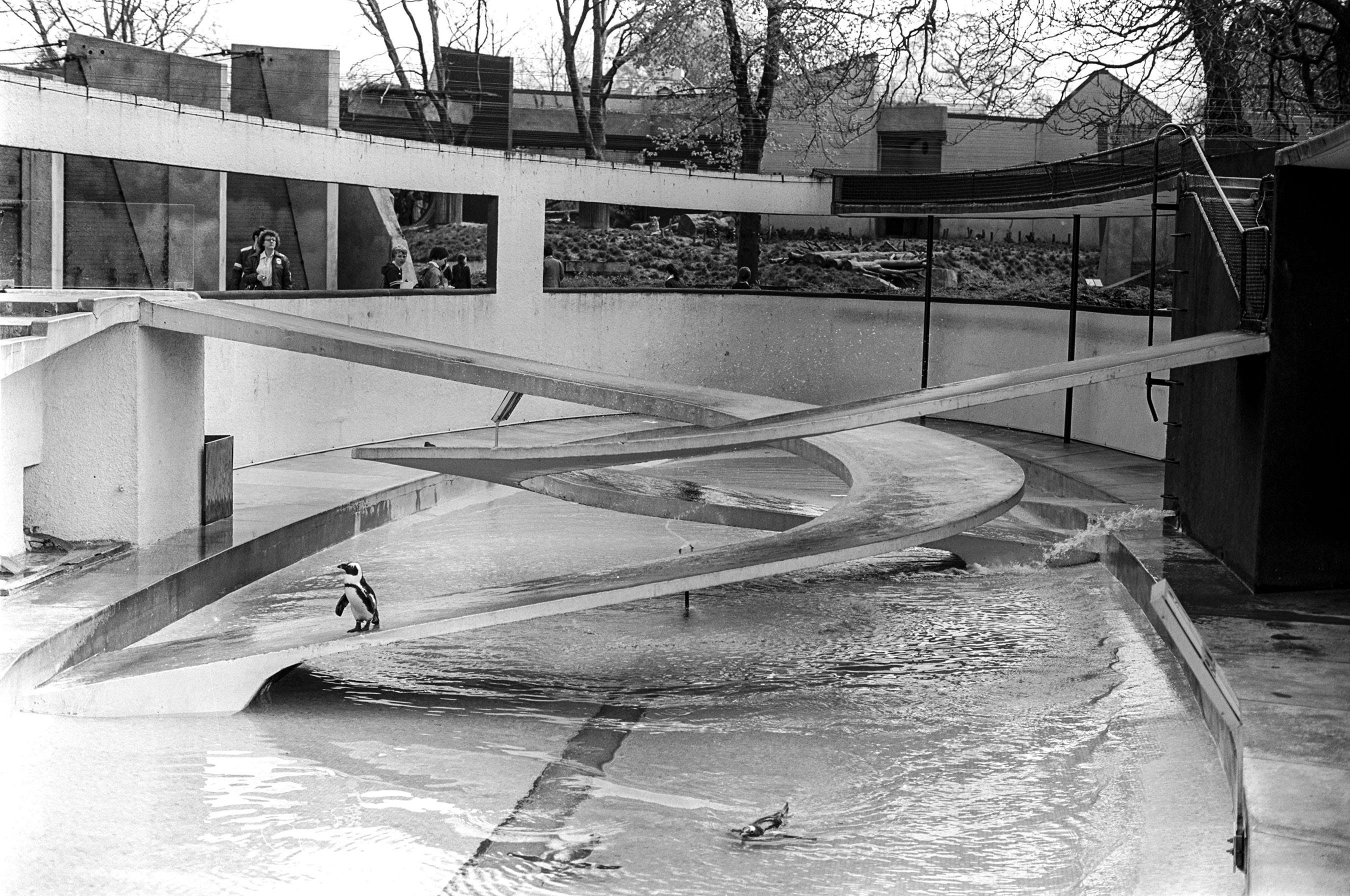
Louis here. I grew up close to London Zoo, where one of my earliest memories is watching penguins waddle around Berthold Lubetkin’s Penguin Pool.
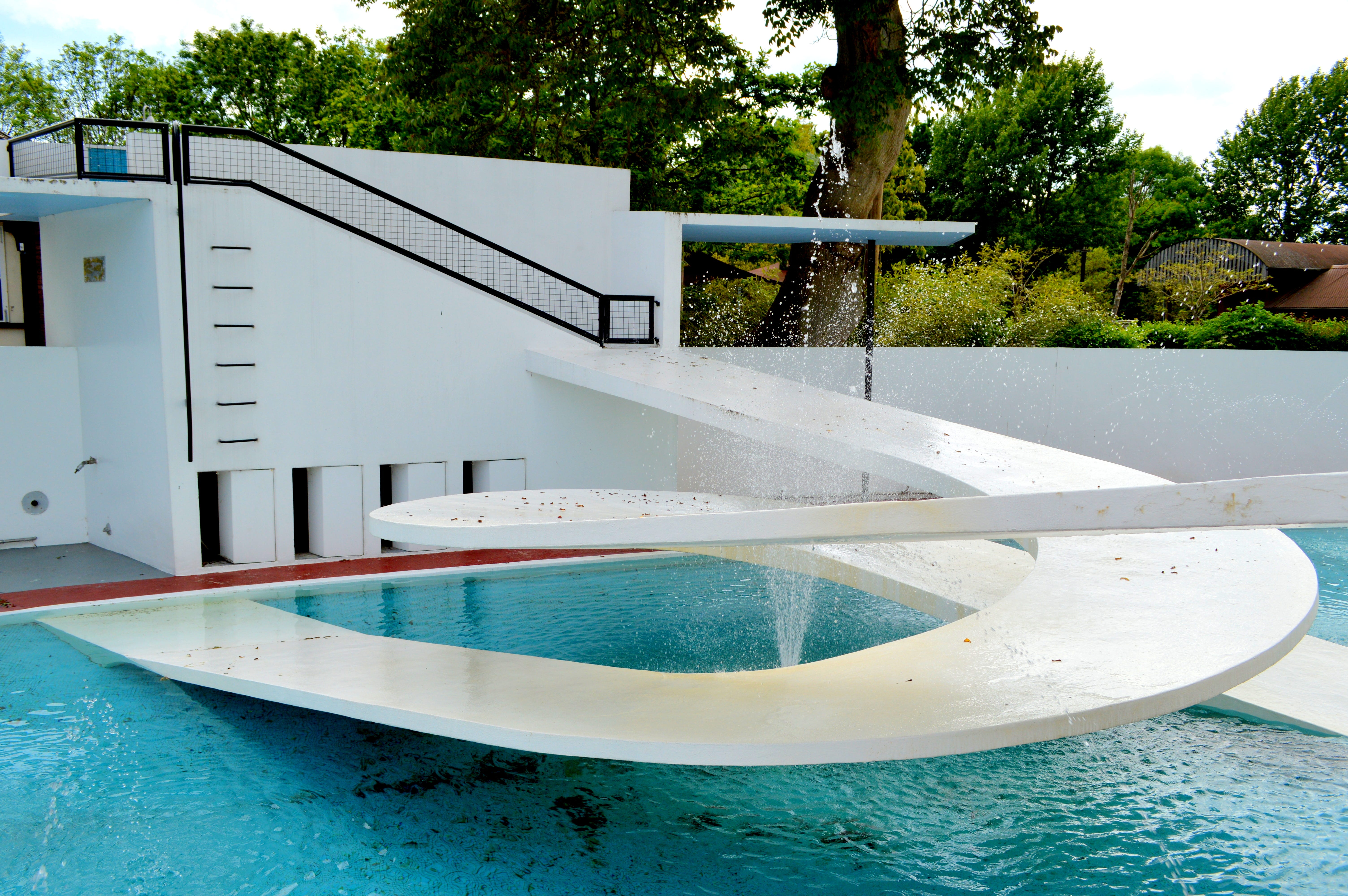
Built in 1934, the white cement structure is joyous. Shaped like an eye, its twisting, unsupported centrepiece was engineered by Ove Arup, who would go on to structurally engineer the iconic roof of the Sydney Opera House. Lubetkin, a pioneer of modernist architecture, had also designed the zoo’s Gorilla House two years before, but it was the Penguin Pool that quickly came to be seen as a shining symbol of the British Modern Movement.
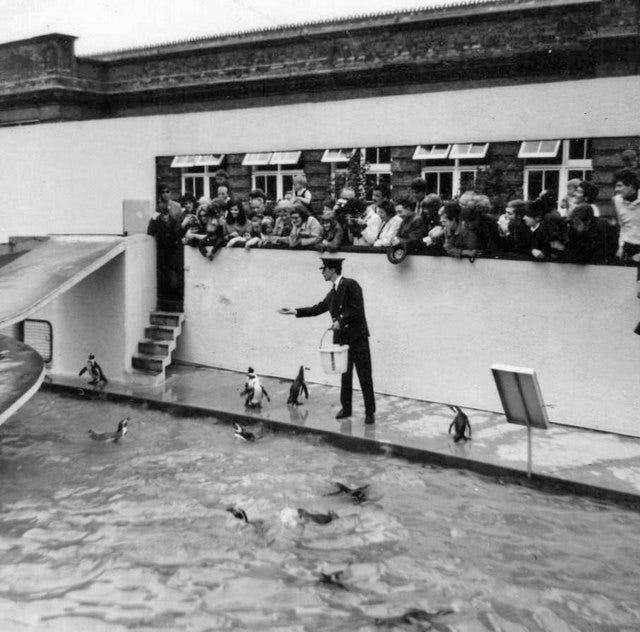
For decades, families loved to visit and watch the penguins being fed and cleaned. Here is some charming footage from 1939…
… and a 1967 photograph of visitors enjoying their view of mealtime.
Why is this interesting?
Since 2004, the structure has sat totally empty. After a renovation, keepers noticed that the penguins were starting to exhibit signs of bumblefoot and aching joints, a result of the pool’s new concrete and quartz paving. After 70 years, the penguins were summarily transferred to their current home of Penguin Beach.
Pre-renovation, Lubetkin’s original design had more thoughtfully featured cork and rubber paving instead. Defenders of his design point out that on top of this, the zoo later chose to house an entirely different variety of penguin inside, a variety that was much less suited to the enclosure’s design.
Lubetkin’s daughter Sasha understood the transfer, especially given her father’s original concern for the animals’ comfort. But asked a few years later what should happen to the structure, she said she was dismayed that it hadn’t been restored in order to house the right penguins with the right materials. Controversially, Sasha said that it was “Perhaps time to blow it to smithereens.” George Osborne, Britain’s former chancellor, responded that her comments were “patricidal.”
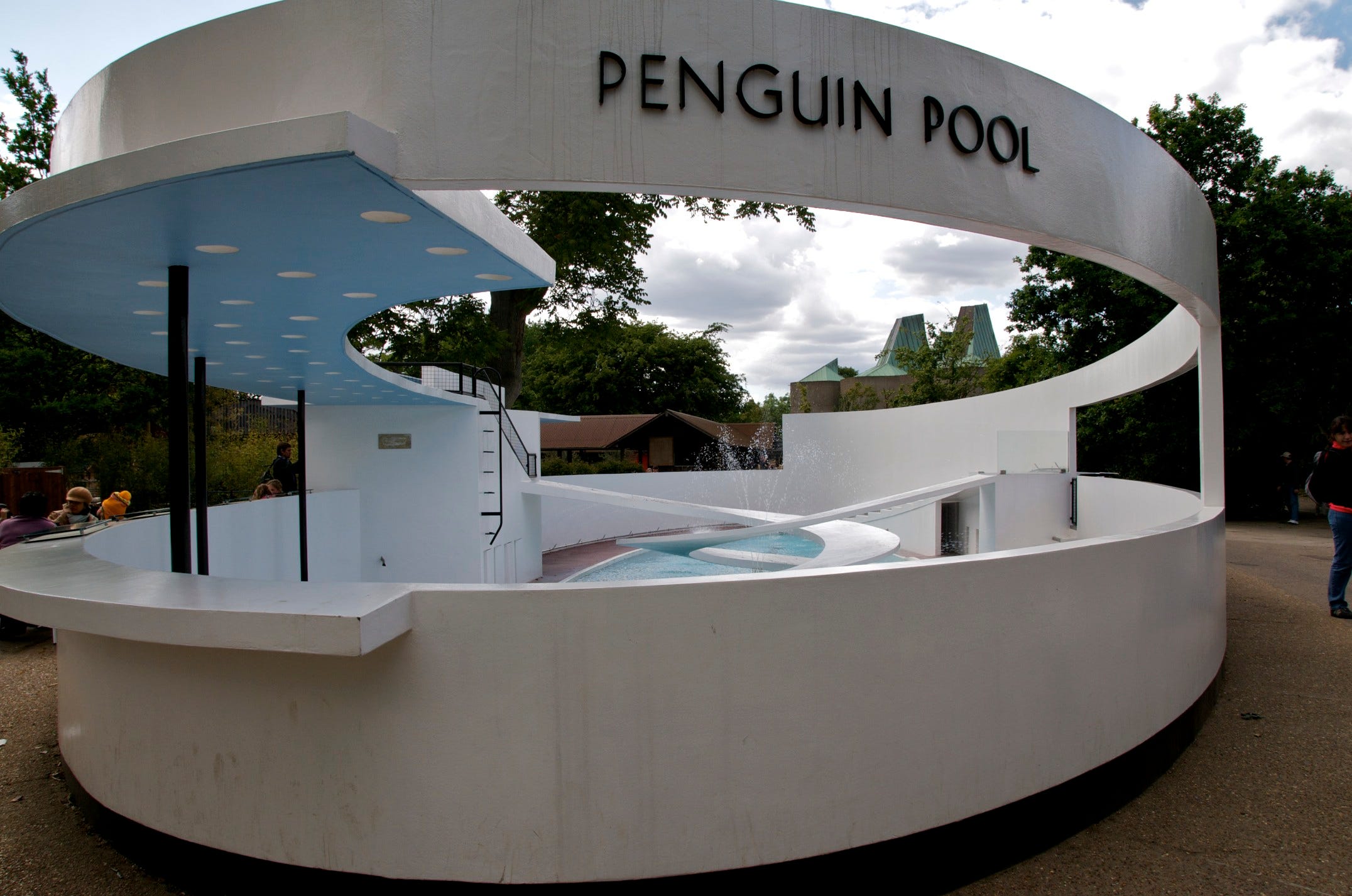
The Grade I-listed Penguin Pool has now become something of a white elephant: Impossible to dispose of, a fortune to maintain. The zoo tried housing its Chinese alligators in it for a while, even updating the pool’s environment, but it wasn’t to be.
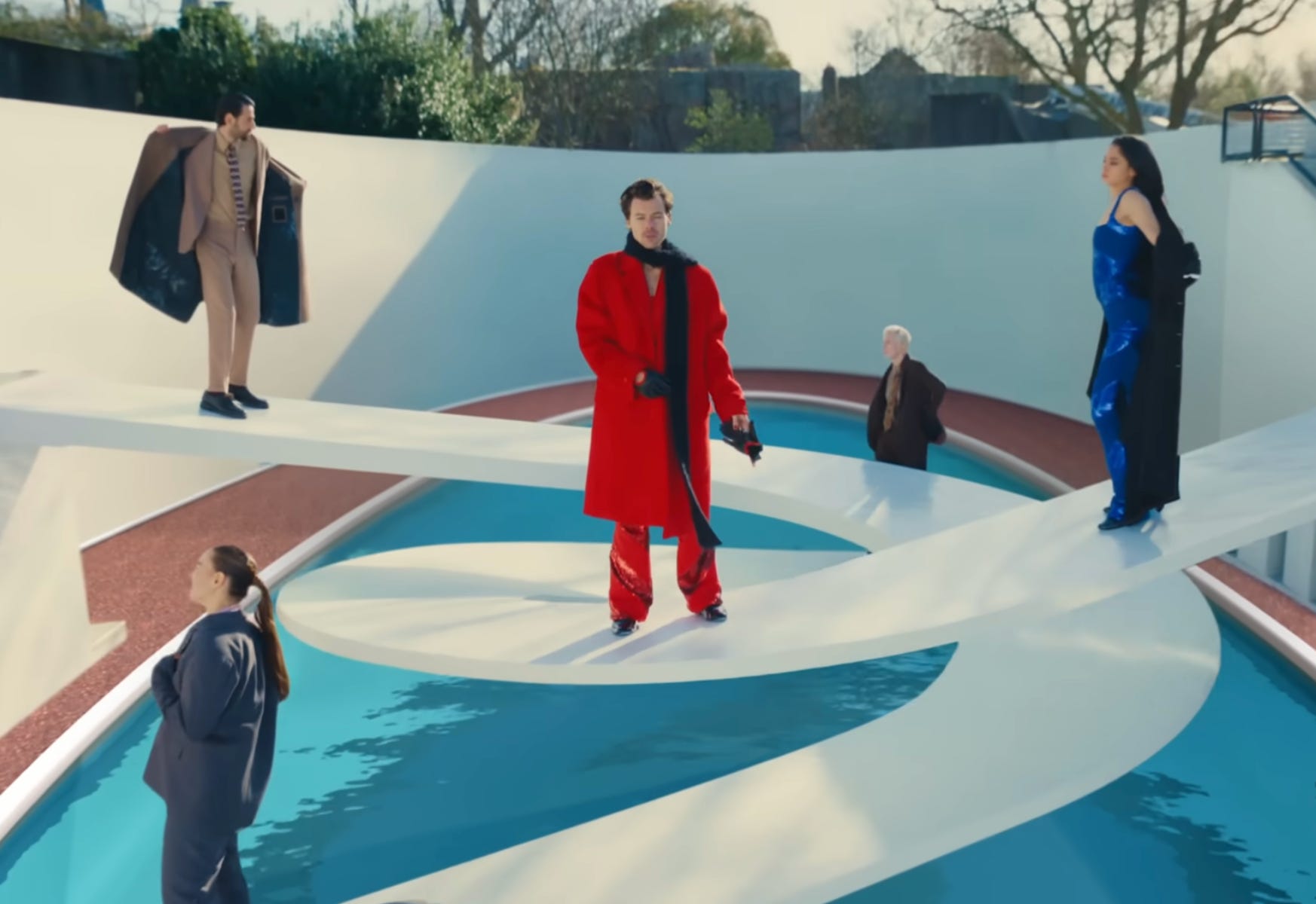
Most recently, Harry Styles brought renewed attention to the pool when he chose to use it as a location for the 2022 music video for his hit single, As It Was. (Potentially but probably not inspired by an early Coldplay shoot that also took place there.)
The writing, perhaps, was on the wall as early as 1970, when the Architect’s Journal contacted Lubetkin to congratulate him on the pool becoming officially Grade-I listed, making it a criminal offence to damage or alter it. His statement? “My personal interpretation is that these buildings cry for a world which has never come into being.”
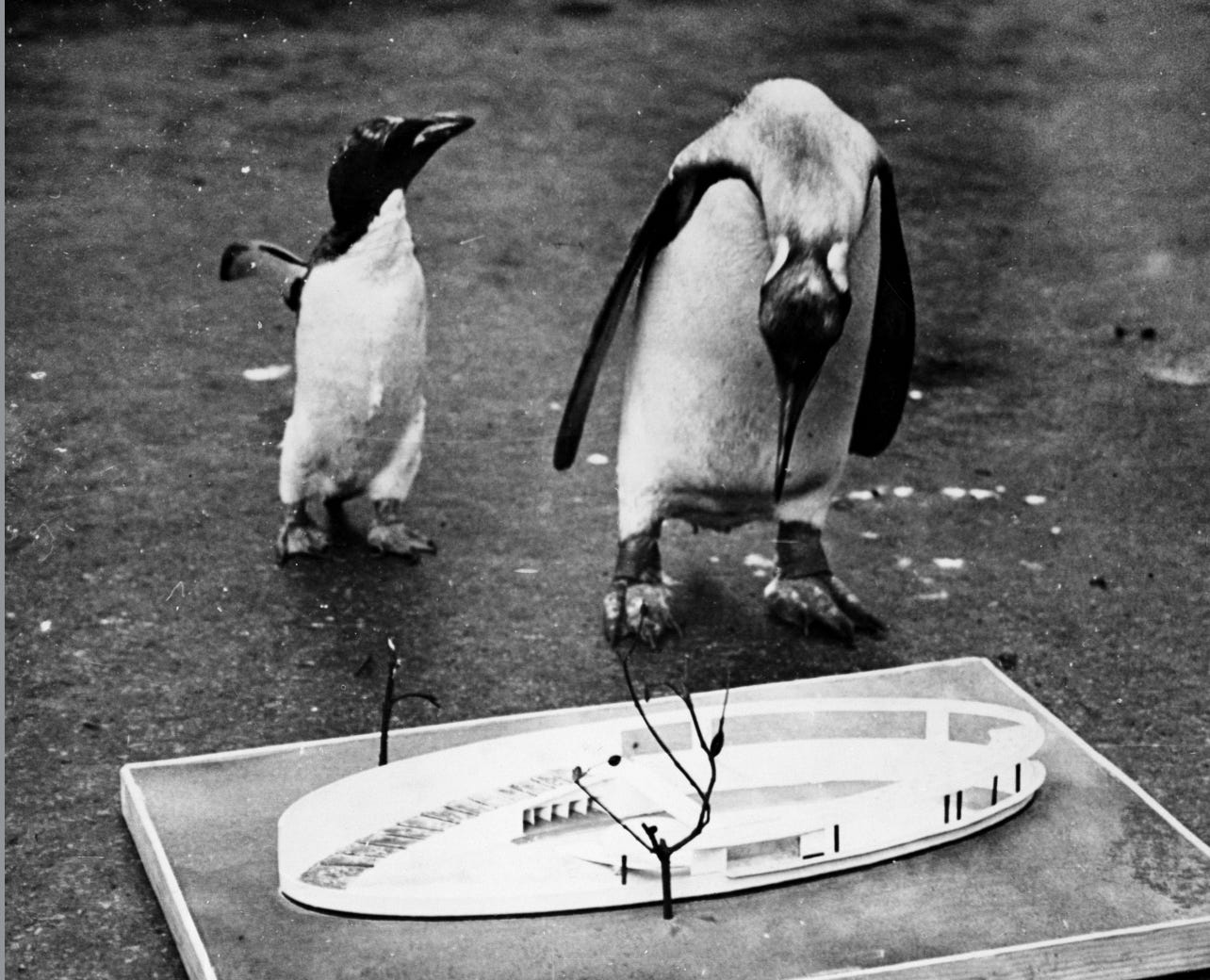
That may be, but we at least still have this picture of penguins inspecting the model in 1933. The photograph—which I found on Ian Leslie’s excellent Substack—was taken by Lubetkin himself, back when he was young and full of hope. (LC)
Bonus links:
99 Percent Invisible — What to Do With London Zoo’s Deserted Penguin Pool
Ian Leslie – Why London’s Famous Penguin Pool Has No Penguins In It
Frieze - The Fate of Berthold Lubetkin’s Modernist Penguin Pool at London Zoo
Wow. So Interesting